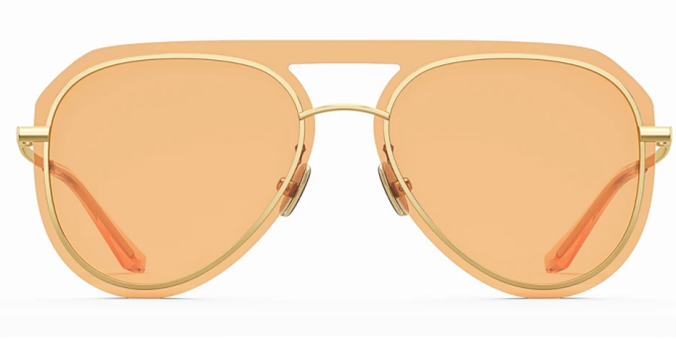
Finding the right pair of sunglasses is the key to your visual comfort as well as to protect your eyes from harmful ultraviolet (UV) rays and it may act as a shield to protect your eyes from flying debris or other hazardous particles.
What does polarized mean?
Generally, over-the-counter (OTC) sunglasses do not come with prescription powers, yet they come with different filters e.g. most commonly polarized lenses or different kinds of lens colours e.g. brown, green, grey and so on.
Polarized Sunglasses
Lenses with polarized function is an excellent option as they help reduce light reflections from water or flat surfaces, which can significantly improve the ability to see objects on the road or under the water surfaces like ocean, stream and lake.
What does polarized mean?
As we know, light scatters and travels in all directions. When the light reaches a flat surface, the light will be reflected and become polarized – instead of scattering in all directions, the light travels in a more uniform (usually horizontal) direction. The polarized light then creates annoying and sometimes, dangerous intensity of light, leading to glare and reduced visibility.
Polarized sunglasses are sunglasses in which the lenses have a special filter, in order to block this type of light beams. This is why polarized sunglasses often look dimmer as compared to non-polarized sunglasses, yet, they are very effective in cutting down the glare and discomfort.
Also, for better comfort and performance with any polarized sunglasses, some people prefer having an additional anti-reflective coating applied at the back lens surface as this will eliminate distracting reflections from the surface of sunglasses when the sun is behind you.
What if I have eye power?
We got you! If you have refractive error or eye power, you can either opt to wear OTC sunglasses with prescription contact lenses on or tinted prescription lenses with polarized filters. Besides, you can go for photochromic sunglasses, which the colour intensity of the lenses can change depending on the UV level outdoors.
How about those who wear progressive addition lenses (PAL)?
Thankfully, even for people who wear PAL, you can wear prescribed polarized sunglasses too! Polarized progressive sunglasses make a great choice for people aged 40 and above, especially those who spend significant time outdoors.
If you are a person who is frequently being in and out of the sun, polarized progressive sunglasses with photochromic functions will be beneficial to you. With the photochromic functions, the lenses will adapt to changing UV condition when they are being worn in and out of the car, enhancing the overall visual quality.
Mirrored Sunglasses
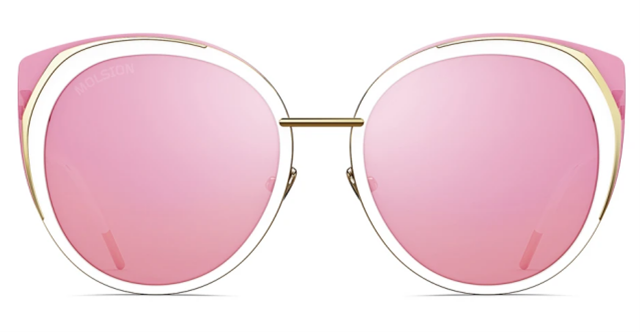
Mirrored sunglasses are often in the limelight of sunglasses industry. Many thought that mirrored sunglasses are merely a trendy or fashion statement, but they provide a brighter vision compared to regular tinted ones because mirrored sunglasses reflect light instead of absorbing it. Hence, you will experience more brightness and more superior visual clarity through mirrored lenses.
On the other hand, some people particularly the introverts, prefer to wear mirrored sunglasses to appreciate the anonymity they experience while putting them on. As you are wearing mirrored sunglasses, no one will notice whether you are making an eye contact or where you are staring at – it is like roaming and walking around in camouflage.
Colour Tints: What Makes The Difference?
Have you ever felt confused with the colour you should go for when picking your own pair of sunglasses? I bet some of you did feel the same!
Fun fact: Different colour tints serve different benefits!
Ideally, subjected to the occasions or activities, sunglasses with the right colour tint ought to ultimately enhance the depth perception and reduce eye strain while providing effortless visibility.
Green
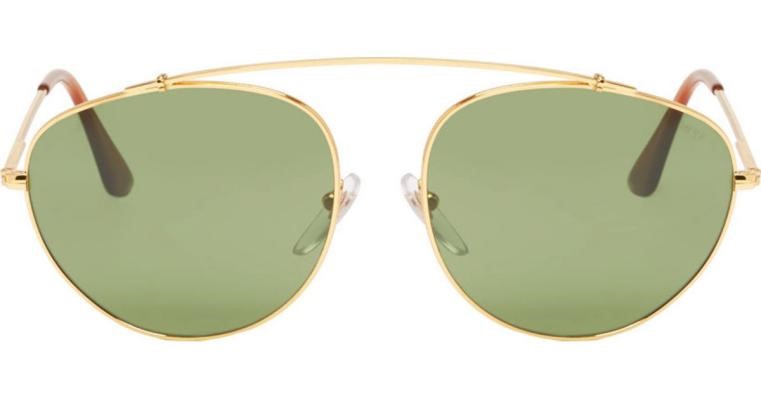
Green tinted lenses improve the contrast of colours by filtering out blue light. Such lenses also help reduce glare and eye strain under bright sunlight; they work well in sunglasses used for everyday wear.
Grey
Grey tint is a neutral colour that shields bright light and reduces glare, especially from the water surface. Therefore, grey tint lenses are especially helpful for fishing. Grey tinted lenses work well on sunny days, making them great for general all-purpose use, such as driving.
Amber or Brown
This glare-reducing tint makes cloudy sky a bit brighter (and hence, your mood!). This colour tint also includes red hues that block the blue light while improving the depth perception. Amber tinted lenses also ensure more comfortable vision under sunny condition and heighten the contrast against green landscapes and blue sky.
Blue or Purple
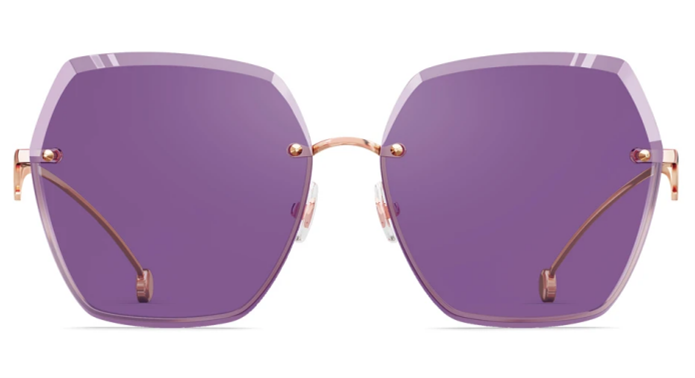
Blue or purple tinted lenses provide stunning colour perception. Moreover, they enhance the contours around objects further while offering protection against reflective surfaces e.g. snow land. Sunglasses with blue colour tint also work well in foggy and misty weather but not for driving. Plus point is that, they look good on almost any skin tone!
Red or Rose
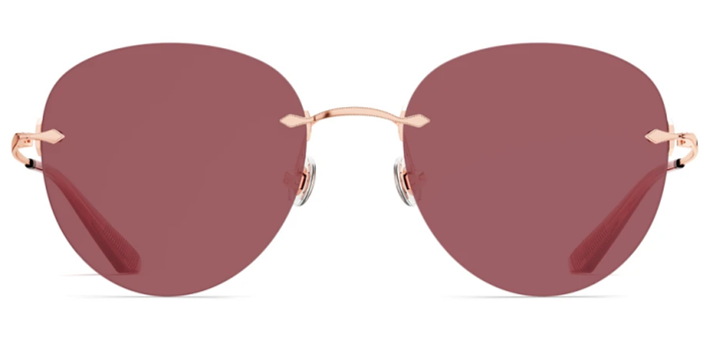
Red and rose tinted sunglasses block blue light effectively, they make your driving so much effortless in terms of visibility as well as reduce eye strain. Red tinted lenses are especially favoured for sports like skiing as they increase the depth of field and enhance the details of the surrounding.
Yellow, Orange or Gold
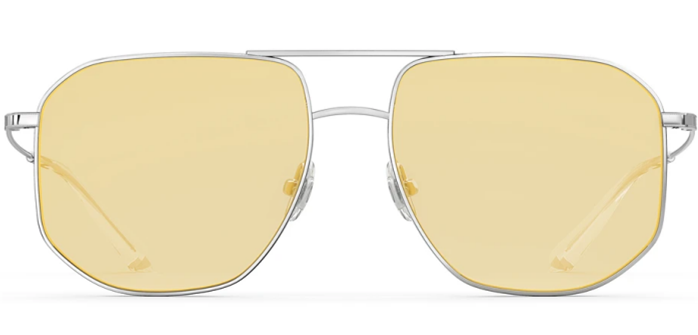
Sunglasses with light colored lenses such as yellow, orange or gold excel in moderate to low light conditions. They provide excellent depth perception and also work well for both outdoor and indoor sports, thanks to the fact that they make surroundings appear brighter and improve visibility of objects. However, such colour tints may distort your colour perception.
After so much information on colour tints, let us round up for you!
Ideal for everyday use: Darker colour tints e.g. brown, grey or green are intended primarily to cut down the glare and reduce eye strain in moderate-to-bright conditions.
Excellent for low to moderate light level conditions: Light colours e.g. yellow, gold or rose are often great for skiing, snowboarding or other snow sports. They provide excellent depth perception and enhance contrasts under tricky or flat-light conditions by making your surroundings appear brighter.
Price Range and Materials: What Makes The Difference?
Even though they serve an almost similar purpose in blocking the bright light, but you may even find that they come in different price range.
Let’s uncover the truth for you!
The more expensive the sunglasses are, the more likely they have higher quality of coatings. Here, we are talking about hydrophobic coating to repel water, scratch-resistant coating to improve durability and anti-fogging coating to reduce the fogging effect during humid weather or under vigorous activities.
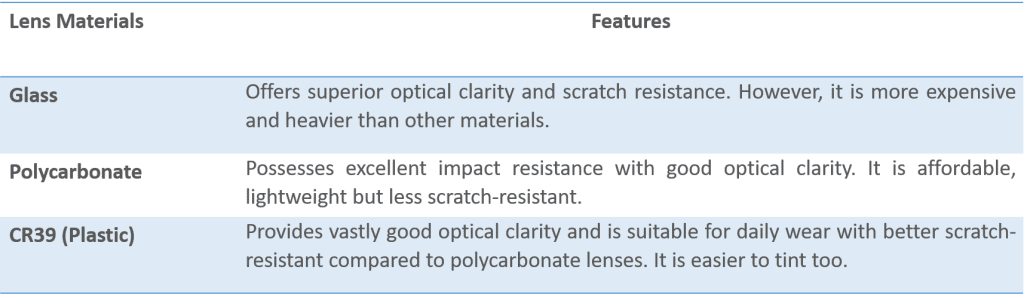
Besides, the materials used to manufacture the lenses do affect the price too, in addition to your overall visual clarity, the weight and durability of the sunglasses.
Most common materials are:
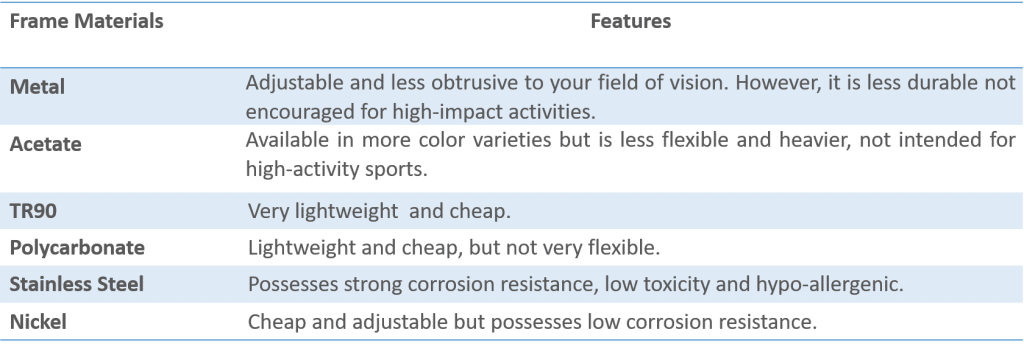
Just like any clear prescription glasses, they have different frame materials.
Generally, determining the frame material of a pair of sunglasses is crucial in ensuring a comfortable wearing experience, more durable and safer eyewear.
Congratulations, you’re now the very one sunglasses expert!
Now you have known there are actually many to learn from a pair of sunnies! It is like “one stone two birds” to have a pair of sunnies that makes you look cool and fabulous while most importantly, able to protect your eyes against harmful HEV rays!
There it comes to a question: which type suits you best? Then, let us from Eye & Glasses team answer your doubts! Come to us and our experienced optometrists are always ready to assist and serve you to your needs. Time to get your eyes shielded from HEV light as early as possible, see you soon!